Introduction
In the history of writing the history of the literature of any language, classifying its Vāṅgamaya (literature/speech) is a challenge. The basis of classification should be such that all Vāṅgamaya is included within it, and a sequential development, decline, similarity, and difference are clearly visible. The diversity of Indian Vāṅgamaya, and its abundance in both numerical and qualitative terms, makes this task even more difficult. Indian scholars have also attempted to classify it in many ways, which are as follows:
1. Division of Vāṅgamaya in Chronological Order (Kāla-krama)
Generally, the classification of all genres of all languages happens according to chronological order. For example, in the history of Hindi literature, the classification of literatures has happened in this form: Ādikāla, Bhaktikāla, Rītikāla, etc.. Compositions obtained in all these periods have a characteristic that is not obtained in others. But in Sanskrit literature, such a classification appears impossible because:
- There is much debate on the determination of the period of Sanskrit writers.
- Regarding this, William Dwight Whitney believes that "All dates given in Indian literary history are pins set up to be bowled down again".
- For example, the most famous poet Kālidāsa is also swinging between 100 BCE to 500 CE.
- There is also considerable debate regarding the mutual priority and posteriority (Paurvāparya) of the works of a single creator.
- The Veda is Apauruṣeya (not of human origin); how will its period be determined?.
- Even if done somehow, a specific characteristic does not reflect in any period in these post vedic (Laukika) literatures.
Therefore, the division of Sanskrit literature in chronological order seems inappropriate.
2. Division of Vāṅgamaya in the Form of Genre (Vidhā)
In other Vāṅgmaya, it seems easy to classify in this form as well, such as in Hindi: novel, story, poetry, etc.. But Sanskrit Vāṅgmaya does not accept this classification either. On doing so, the following difficulties arise:
- In which genre will Vedic Vāṅgamaya come—Prose (Gadya)? Poetry (Padya)?.
- A single creator writes in various genres.
- If philosophical texts and poetic-theory texts are kept as a single prose (Gadya) form, it will be a disaster (Anartha).
- Therefore, this style of Western classification does not seem appropriate for Indian Vāṅgamaya.
3. Classical, Vedic, and Folk Literature: Inappropriate Classification
Some people (e.g., Keith, Iyengar) have classified Indian Vāṅgamaya in this form:
- Vedic: Compositions prior to Pāṇini come in this because the influence of Pāṇini is not seen on them.
- Classical Sanskrit Literature: Compositions after Pāṇini come in this.
- Folk Sanskrit Literature: Compositions written in non-scriptural (Aśāstrīya), Prākṛta, etc., styles come in this.
On classifying Sanskrit Vāṅgamaya in this way, the following problems arise:
- Where to keep Rāmāyaṇa, Mahābhārata, and Purāṇa? In Vedic before Pāṇini, or in compositions after Pāṇini?.
- "Classical" means scriptural (Śāstrīya); therefore, from this, it is known that Vedic Vāṅgamaya is a non-scriptural composition.
- The classification of folk literature (Loka Sāhitya) does not fit in this Vāṅgamaya; here, Śāstra and Loka are complementary to each other.
4. Classification of Philosophical Vāṅgamaya in the Form of Āstika and Nāstika
In the Western tradition, philosophical Vāṅgamaya is classified in two forms:
- Orthodox: Those who believe in the Bible.
- Heterodox: Those who do not believe in the Bible.
Translating these words into Hindi (Āstika and Nāstika), Dr. Sarvepalli Radhakrishnan has classified nine major philosophies in his book The Indian Philosophy:
- Nāstika Darśana: Cārvāka (Lokayata), Buddhist, Jain.
- Āstika Darśana: Sāṅkhya, Yoga, Nyāya, Vaiśeṣika, Mīmāṃsā, Vedānta.
But what is the meaning of the terms Āstika and Nāstika?. In the Sanskrit dictionary, their meaning is: Āstika is one who believes in God; Nāstika is one who does not believe in God. Here (in this classification), their meaning is: Nāstika is one who does not believe in the Veda or does not accept it; Āstika is one who believes in the Veda or accepts it.
The following difficulties appear from this classification:
Why take a meaning that is not present in our dictionary for these words?.
If we consider Āstika/Nāstika as related to God, then Sāṅkhya should be in Nāstika. Even if considered in the sense of the Veda, the classification of all philosophies cannot happen. In Indian Vāṅgamaya, there are 32+ schools and a total of 16 philosophies have been considered major (according to Sarvadarśanasaṃgraha), and their classification in these two forms is not possible. For example, Śaiva Darśana is related to Āgama; in which category should it be placed?.
Therefore, this attempt seems inappropriate.
5. Indian Classification (Paddhati 1)
Classification of Indian Vāṅgamaya according to Rājaśekhara’s Kāvyamīmāṃsā: (This classification is quite prevalent) . Rājaśekhara classifies Indian Vāṅgamaya in the second chapter of Kāvyamīmāṃsā. It should be noted that such an extensive discussion is not obtained before him. Rājaśekhara's classification is as follows:
"Iha hi vāṅgamayamubhayathā śāstraṃ kāvyaṃ ca | Śāstrapūrvakatvāt kāvyānāṃ pūrvaṃ śāstreṣvabhiniviśeta |".
Vāṅgamaya Classification Structure:
Śāstra:
- Apauruṣeya (Divine): Four Vedas: Ṛgveda, Yajurveda, Sāmaveda, Atharvaveda. Four Upavedas: Itihāsaveda, Dhanurveda, Gāndharvaveda, Āyurveda. Six Vedāṅgas: Śikṣā, Kalpa, Vyākaraṇa, Nirukta, Chanda, Jyotiṣa. Seventh Vedāṅga: Alaṅkāra. (Some scholars) Fifth Veda: Nāṭyaveda.
- Pauruṣeya (Human):Purāṇa [Purāṇa (18) + Itihāsa : Divided into Parikriyā (one hero like Rāmāyaṇa) and Purākalpa] (many heroes like Mahābhārata), Anvīkṣikī, Mīmāṃsā, Smṛti
Kāvya: (see in the Vishvanātha Section)
Fourteen Vidya-sthānas: Four Vedas, six Vedāṅgas, four Śāstras (Purāṇa, Mīmāṃsā, Dharmaśāstra, Anvīkṣikī). Rājaśekhara believes that Kāvya is the fifteenth Vidya-sthāna. By adding Vārtā, Daṇḍanīti, Kāmasūtra, and Śilpaśāstra, there are a total of eighteen Vidya-sthānas.
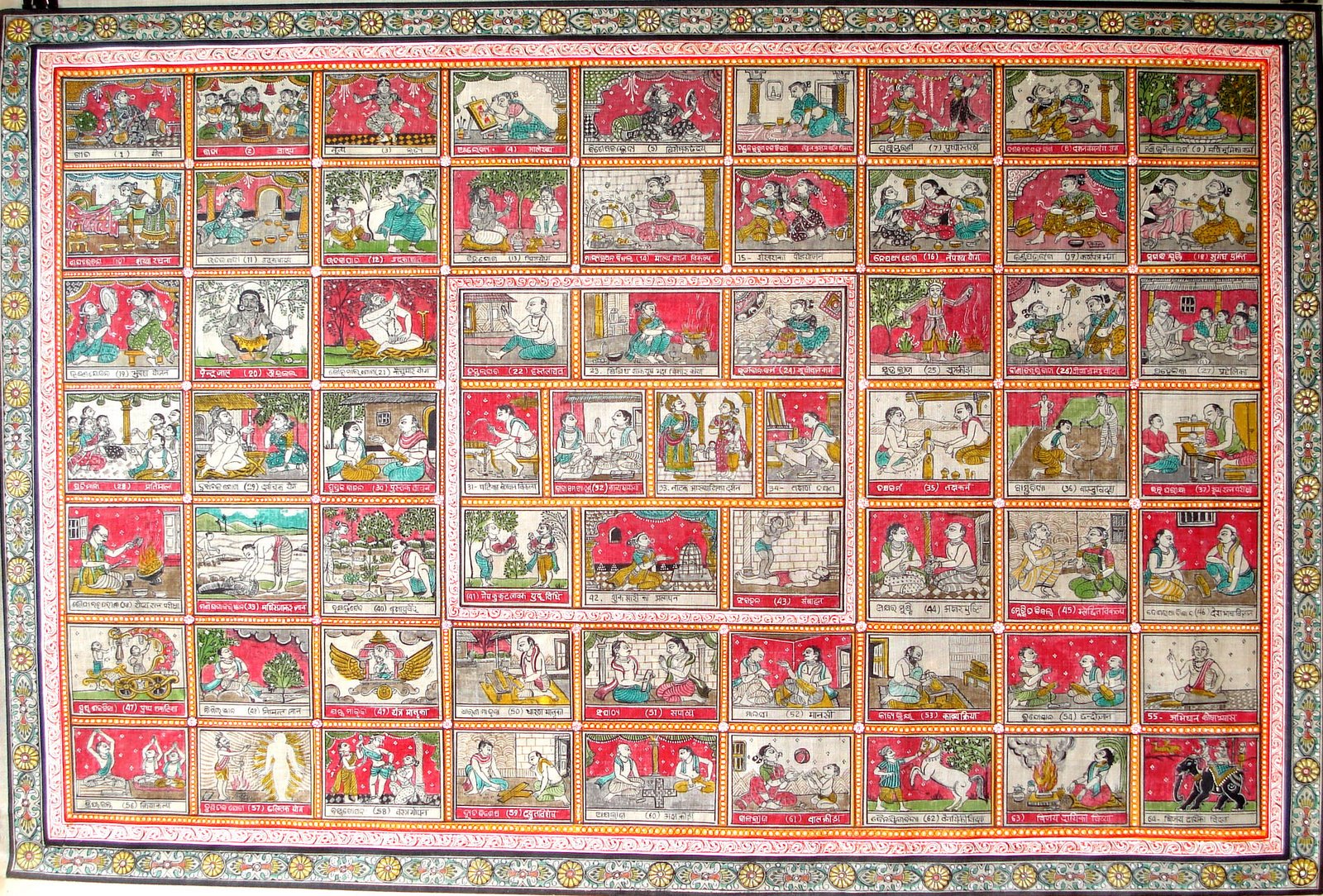
Sub-disciplines (Upavidyā): There are 64 in number = Arts (Kalās).
Divisions of Kāvya: Gadya (Prose) and Padya (Poetry).
Rājaśekhara’s explanation classifies the scriptural side of Vāṅgamaya well, which is also universally accepted, but he has not classified Kāvya in such a better form. He has only described its parts by considering Kāvya as a "Person" (Puruṣa). However, subsequent poetic-theorists fulfilled all this.
Divisions of Kāvya by Viśvanātha:
Dṛśya (Visible):
- Rūpaka: 10 types (e.g., Nāṭaka, Prakaraṇa).
- Uparūpaka: 18 types (e.g., Nāṭikā).
Śravya (Audible):
- Padya (Poetry): Mahākāvya, Khaṇḍakāvya, Koṣa.
- Gadya (Prose): Kathā, Ākhyāyikā.
Campū: Mix of Gadya and Padya.
Karabhaka: Mixed Language
6. Indian Classification (Paddhati 2): Based on Instruction Style (Upadeśa)
Ācārya Mammaṭa, while telling the purposes of poetry, says:
"Kāvyaṃ yaśase'rthakṛte vyavahāravide śiveterakṣataye | Paranivṛttaye kāntāsammita tayopadeśayuje ||".
Here, poetry is considered a "beloved-like" instruction (Kāntā-sammita upadeśa). Clarifying this, he has made three divisions of Indian Vāṅgamaya on the basis of the style of instruction:
| Prabhu-sammita (Command-like) | Suhṛt-sammita (Friend-like) | Kāntā-sammita (Beloved-like) |
|---|---|---|
| Authority: Like a King's order (Rājājñā). | Authority: Like a friend's advice (Mitravat). | Authority: Like a beloved's persuasion. |
| Emphasis: Word-dominant (Śabda-pradhāna). | Emphasis: Meaning-dominant (Artha-pradhāna). | Emphasis: Sentiment-dominant (Rasa-pradhāna). |
| Adherence: Must be followed literally (Akṣaraśaḥ). | Adherence: Intent is followed rather than literal words. | Adherence: Influences through aesthetic delight (Rasa). |
| Difficulty: Very difficult to understand for the delicate (Sukumāras). | Difficulty: Easier than Prabhu-sammita but requires attention. | Difficulty: Effortless and very easy to understand. |
| Examples: Four Vedas, Vedāṅgas, Philosophies (Darśanas), Śāstras. | Examples: Rāmāyaṇa, Mahābhārata, Purāṇas, Itihāsa. | Examples: Kāvya (Poetry). |
7. Indian Classification (Paddhati 3): Philosophical Sense
In the philosophical sense as well, Indian Vāṅgamaya is classified into two parts:
Parā-vidyā (Higher Knowledge): High-level knowledge related to the soul (Ātman) and Brahman. Upanishads can also be kept in this. It is obtained in the state of actual experience of Mokṣa (liberation).
Aparā-vidyā (Lower Knowledge): Low-level knowledge that provides desired fruits (Iṣṭa phala). It includes Vedic mantras, Rāmāyaṇa, Mahābhārata, Purāṇa, poetry, and scientific texts. It is considered a helper in living life and the first three Puruṣārthas (Dharma, Artha, Kāma).
As described in the Muṇḍakopaniṣad:
"Dve vidye veditavye iti sma yadvidanti parā caivāparā ca | Tatrāparā ṛgvedo yajurvedaḥ sāmavedo'tharvavedaḥ śikṣā kalpo vyākaraṇaṃ niruktaṃ chando jyotiṣamiti | Atha parā yayā tadakṣaramadhigamyate ||".
8. Other Possible Classifications
Some Ācāryas classify Vāṅgamaya into Vedic and Avaidika forms. The meaning of Avaidika is not in the form of negation, but in the sense of difference but similarity.
It can also be done in the form of Apauruṣeya and Pauruṣeya. The Veda is Apauruṣeya and other texts are Pauruṣeya.
Some poetic-theorists have classified Kāvya (a part of Indian Vāṅgamaya) on the basis of suggestion (Dhvani):
- Dhvani Kāvya: Superior (Uttama) poetry.
- Guṇībhūta-vyaṅgya Kāvya: Middle (Madhyama) poetry.
- Citra Kāvya: Inferior (Adhama) poetry.
Conclusion
From the above discussion, it is clearly known that classifying Indian Vāṅgamaya by the Western method seems inappropriate and meaningless (Anarthaka). A meaningful classification of Indian Vāṅgamaya is possible only by the method developed by Indian Ṛṣis. Just like diversity in India, many bases and methods are obtained in its classification. If illustrated briefly, it can be shown as follows:
Diverse Bases of Classification of Indian Vāṅgamaya:
- Western Method (Inappropriate): On the basis of Time (Kāla); On the basis of Genre (Vidhā); Āstika, Nāstika (in the sense of God/Bible); Vedic, Classical, Folk.
- Indian Method: Paddhati 1: Rājaśekhara’s Kāvyamīmāṃsā (Śāstra and Kāvya); Sāhityadarpaṇa (Viśvanātha) for Kāvya divisions. Paddhati 2: On the basis of Instruction (Upadeśa) according to Mammaṭa (Prabhu, Suhṛt, Kāntā-sammita). Paddhati 3: Parā and Aparā Vidya. Other Methods: Vedic/Avaidika; Apauruṣeya/Pauruṣeya; Dhvani-based divisions of Kāvya.
Note: This article was originally a part of exam notes prepared for the Paper: [SK 401] Text and Indian Intellectual Tradition at JNU.
#IndianKnowledgeSystems #IKS #BhāratīyaVāṅgamaya #SanskritLiterature #classificationOfIKS #IndianIntellectualTradition #Rājaśekhara #Kāvyamīmāṃsā #Mammaṭa #Kāvyaprakāśa #Upadeśa #ParāVidyā #AparāVidyā #VedicStudies #ClassicalSanskrit #KashmiriShaivism #TrikaPhilosophy #DecolonizingTheMind #IndicStudies #AncientIndianScience #SanskritGrammar #Advaitavāda #NonDualism #Abhinavagupta #DhvaniTheory #Śāstra #Kāvya #SanātanaDharma #IndianPhilosophy #AncientWisdom #VedicHeritage